The Israeli newspaper Haaretz published an article on April 6th titled “Jews Should Not Have to Take a Detour”, spotlighting the case of Paul A. Levine. (1)
In it, they make one thing painfully clear: Levine is being systematically erased from institutional memory — and that silence speaks louder than any statement.
You can read our latest appeal (2) to the university, but here’s the heart of it:
By refusing to even mention Levine by name, the university sends a clear message: Erasure is easier than accountability. Silence is safer than truth. This isn’t just about ignoring a scholar. It’s about erasing the very questions he dared to ask — and that’s a dangerous precedent.
When an internationally respected Holocaust scholar like Paul A. Levine can simply be removed from memory, we have to ask: Whose memory is protected, and whose gets deleted next? And if this is happening at Sweden’s oldest university — a supposed hub of critical thought — what does that say about the future of Holocaust Studies there?
How stable is the memory we rely on, and how easily can it collapse?
We’ll have to wait and see. But one thing’s for sure: this community is watching.
On behalf of the initiative, I want to thank all of you — some of you have been with us for six years now! Your continued support is what makes this possible.
A special thanks to journalist David Stavrou and Haaretz for shining a light where others prefer shadows.
“Dear Elena and the Paul A. Levine Library, In regards to your questions about the conference you refer to, it was not arranged by Uppsala University and thus, I cannot answer any questions on how it was organized. In regards to your questions concerning the renaming of the Hugo Valentin Centre, I refer to my previous answer.”
In fact, this reply is yet another disheartening attempt by the university to distance itself from Levine’s name — ignoring our outreach, keeping an international conference that supposed to honor Levine hidden from public view, and recently, renaming the center raised up by Levine to make the center essentially, nameless.
We do not accept this kind of response
Removing the name of Hugo Valentin from the Center for Holocaust and Genocide Studies“has been described by international scholars and historians as ‘removing the Jewish perspective from the Holocaust,’ which may explain why this academic center has repeatedly rejected requests to honor Jewish Holocaust historian Paul Levine, who was one of its leading historians. Although Levine, who died in 2019, was a groundbreaking Holocaust historian and a laureate of the Raoul Wallenberg Centennial Medal, the center refused to create a memorial page on its website or place a plaque at the center to recognize his contribution.’ – uncovers Haaretz, the newspaper with the third-largest circulation in Israel.Could this latest Sweden’s intention of “removing the Jewish perspective from the Holocaust” also be the hidden message behind the unemphatic, incomplete, and superficial university’s response — one that makes no mention of Levine — or is there another explanation?
Apropos, the conference you referred to “Advances in Holocaust Research and Education: A Re-evaluation of Perspectives and Methods. A conference in memory of Paul A. Levine”— which you claim was not organized by UU — was, in fact, organized by Uppsala University’s institution the Hugo Valentin Center that was existing then (where the conference also took place) in tight cooperation with some others. Moreover, this two-days international conference was announced merely through university’s intranet, as much as possible without leaking to the outside world about its achievement – a bothering and upset nuance for the international participants. So, why your response was again a vague denial?
Some deeper concerns
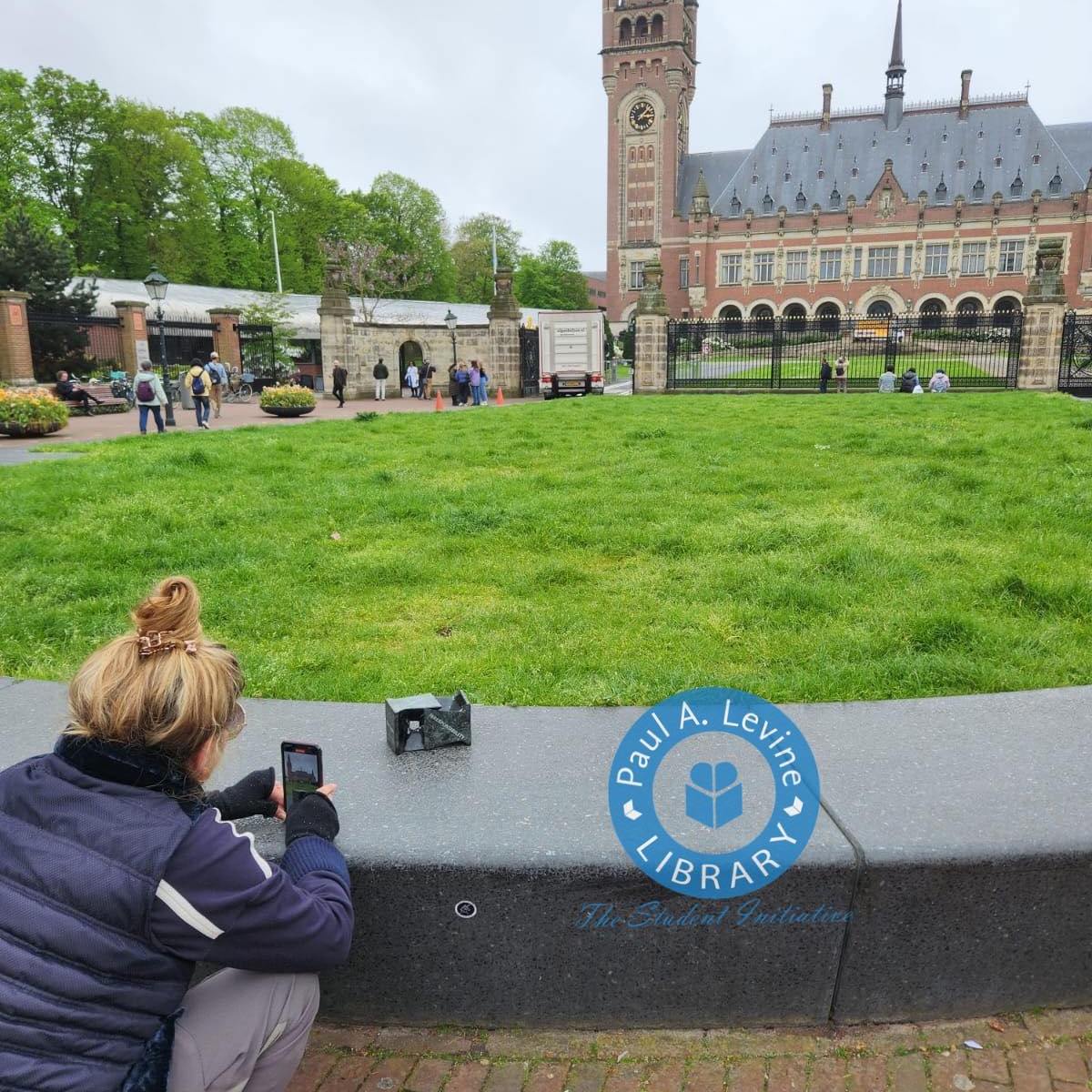
Why did the named conference organizers—affiliated with Uppsala University, including one of Levine’s co-authors and another with personal family ties to him—not only exclude our initiative, but go so far as to actively conceal the international event held in Levine’s honor from the public? Was it because some of organizers assumed we would not come empty-handed, but with A Traveling Tombstone, a memorial stone that has no permanent place, as supposed for a tombstone, but a story to tell? Isn’t that one of real reasons? Could the exclusion of the initiative have been an attempt to cover up a deeply troubling history involving some of those individuals? After all, Levine was buried in a collective grave, in direct contradiction to his last wish. A try to avoid this unemphatic decision was a key reason for launching our initiative in fall 2019, right after the historian’s passing — to secure funding for a proper resting place with a personal tombstone, as Levine had wished but was ultimately denied.
Sadly not enough, Levine was denied the recognition he deserved after his death—including when Levine was post mortally refused a national award in 2021 under the explanation that it could not be given posthumously. What a poor excuse?! By that time, the awarding body was aware of Levine’s passing and could have easily chosen a more visible and appropriate way to honor the historian—had they approached the situation with empathy and thoughtfulness. What makes this all the more striking is that at the very university where Levine dedicated decades of his life—establishing the Hugo Valentin Center into an internationally recognized institution—not a single physical or digital space has been created in his memory at Uppsala University. Quite the opposite, the university’s pages that have included Levine’s name disappeared, being completely removed. Finally, as one of the most influential and respected newspaper in Israel reports,“the center refused to create a memorial page on its website or place a plaque at the center to recognize his [Levine’s]contribution”.
Uppsala, what is really going on❓
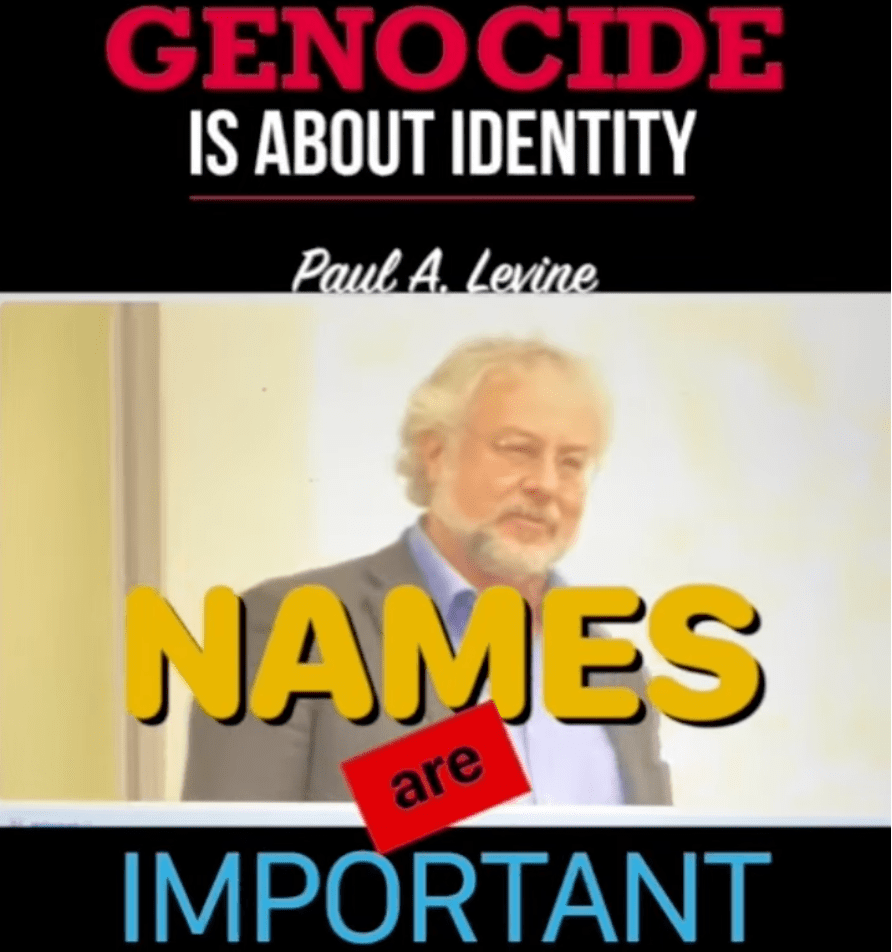
What is this “secret” that is being withheld? Is it the “removing the Jewish perspective”, or simply the university’s inability to act with empathy? And yet, that very empathy was the core of Levine’s teaching and writing. Historian insisted that studying the Holocaust must go beyond facts — that it must foster human understanding and moral responsibility. The absence of such empathy in how Uppsala University handles Levine’s memory is not just disappointing — it’s both a scandal and, as we learn, part of a broader pattern of marginalizing Jewish voices in Swedish academia. Fortunately, it’s no longer a secret.
Indeed, why does Uppsala University continue to avoid addressing Levine’s memory, when there is nothing left to hide? Why not simply collaborate with our initiative in building a proper, lasting memorial for the Jewish, Swedish American historian and Raoul Wallenberg Medal laureate? Because our initiative will build it regardless, but together we could do far more, don’t you think so? Or is there still something Uppsala University isn’t telling us❓
Au passage, there are indications shedding more light on how Paul A. Levine was pushed out of the university in 2014 by effectively pressuring him into signing a resignation letter “of his own will” precisely at a time when Levine was ill and undergoing his medical treatment. Could this fact be also part of the reason behind the rushing erasure of Levine’s memory from the university’s landscape? – We don’t know for certain yet, but it seems there’s another little-known chapter in this story worth uncovering. Especially in a time when, across various contexts, the removal of the Jewish perspective from the Holocaust appears to be an emerging pattern in Swedish academia, as we continue to hear and read.
Whether our questions will be forwarded to a person at Uppsala University who is soon prepared to answer them – honestly, respectfully and with the empathy that Paul A. Levine taught is essential for historical understanding, instead of Uppsala University continuing to dishonor Levine’s memory through silence and exclusion… is considered a very faint glimmer of hope.

 You can read our latest appeal (2) to the university, but here’s the heart of it:
 How stable is the memory we rely on, and how easily can it collapse?



 Paul A. Levine Library